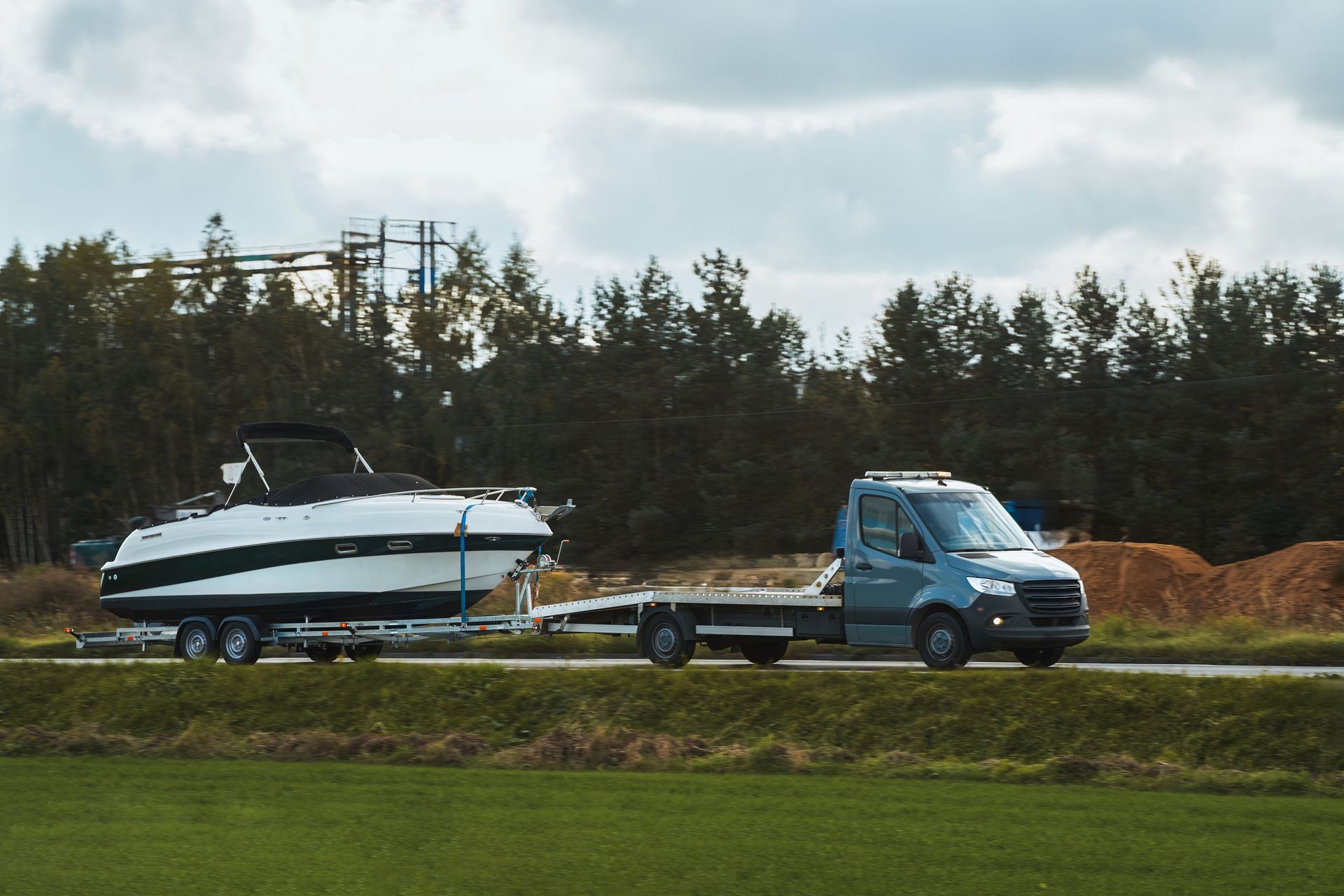

Permits for Transporting Large Marine Vessels
Oversized boat permits in Nationwide for dealers, transport companies, and private owners moving vessels exceeding road limits
Boat dimensions often exceed legal road width limits when measured beam-to-beam, especially for catamarans, pontoons, and cruisers wider than the 8'6" threshold most states enforce without special authorization. Viking Permits LLC coordinates permitting for oversized boat transport by calculating total transport width including the trailer, accounting for hull shape and overhang, and identifying routes that accommodate the combined dimensions through areas with adequate lane width and clearance. A 10-foot beam becomes a 12-foot transport width after accounting for trailer rails and tie-down positioning, which requires permits in nearly every jurisdiction crossed during highway movement.
The process involves documenting exact vessel dimensions, verifying trailer configuration, mapping routes that avoid narrow bridges and tight urban corridors, and securing permits that authorize travel during specified time windows when traffic volumes allow safe passage of wide loads.
Begin permit coordination by submitting boat specifications and transport routing through the Apply Now page.
What Proper Boat Transport Requires
Oversized boat transport requires measuring the widest point of the hull, adding trailer width and any protrusions from navigation equipment or outriggers, then calculating whether the total exceeds state-specific width limits. Permit applications specify these dimensions precisely because enforcement officers measure the complete transport package, not just the vessel itself.
Once the permit is issued, you receive routing instructions that specify approved highways, restricted travel times such as daylight-only movement, and requirements for warning flags, lights, or escort vehicles based on how much the load exceeds standard widths. Drivers follow these conditions exactly because deviations can result in citations even when a valid permit was obtained, since the permit authorizes only the specified route and conditions.
Route planning for boat transport considers bridge clearances for tall masts or towers, turn radius requirements for long hull and trailer combinations, and seasonal restrictions in areas where tourist traffic or construction narrows available lane width. Some coastal routes experience heavy recreational traffic during summer months, affecting permit availability and travel time windows when oversized loads are authorized.
Common Questions About This Service
Boat transporters and owners often need clarity on measurement requirements and routing restrictions before scheduling vessel movement.
What boat dimensions trigger permit requirements?
Any transport width exceeding 8'6" requires oversize permits in most states, which includes many boats with beams over 8 feet once trailer width is added. Height becomes a factor for sailboats with masts or sportfishers with tall towers that exceed the 13'6" clearance standard on many highway overpasses.
How are routes selected for oversized boat transport?
Viking Permits LLC identifies highways with adequate lane width to accommodate the vessel beam, avoids low overpasses that can't clear tall superstructures, and selects corridors where bridge and tunnel restrictions don't prohibit wide loads. Some coastal areas maintain specialized boat transport routes that reduce permitting complications for common vessel sizes.
Why do some boat transports require escort vehicles?
Escort requirements typically apply when beam width exceeds 12 feet or when overall length including trailer surpasses limits where rear overhang creates visibility concerns for following traffic. Escorts provide warning to other drivers and assist with lane positioning during turns where the wide beam could encroach into adjacent lanes.
When should boat transport permits be requested?
Submit permit applications as soon as transport dates and routing are confirmed, especially during spring and summer when high permit demand and increased road construction can extend processing times. Last-minute requests face delays if routing requires engineering review or if permit offices experience high application volumes during peak boating season.
What happens if boat dimensions were measured incorrectly on the permit?
Permits are issued for specific dimensions, so discrepancies discovered during inspection require permit amendment before travel can continue legally. Measuring the complete transport package including trailer width, tie-down positioning, and any protruding hardware prevents situations where issued permits don't match the actual configuration arriving at inspection points.
Viking Permits LLC handles oversized boat transport permitting with attention to dimensional accuracy and compliant routing that accounts for vessel-specific transport challenges. Visit the Apply Now page to submit your boat specifications and planned transport dates for permit processing.